
What is Team Clock®?
Team Clock® transforms teams, impacting company culture and morale. By identifying and addressing the obstacles interfering with performance, teams can spend more time focusing on their work and less time on the politics of their workplace. Team Clock gives teams the tools they need to adapt to change and repair themselves for the lifespan of the entity.
How We Do It
Common Team Challenges
Books
Team Engagement
Interpersonal
Certification
![Graphic of The 4 Stages of a Team [Distancing, Investment, Trust, Innovation]](https://teamclock.com/wp-content/uploads/the-4-stages-cycle-badge.svg)
How We Help
All relationships travel through cycles of growth and change. Whether it’s two people in a partnership, a team of people with a common goal or an organization with a mission, the living entity evolves through predictable stages. At the beginning, the team makes an INVESTMENT in a future together and carefully defines its direction. As the team becomes close and discovers how to work out differences, TRUST becomes the fuel for connection. The foundation of shared values and accountability becomes a platform for INNOVATION. This exploration creates change, which requires some DISTANCING to adjust to what has been lost, refuel and adapt to the new circumstances.
Read Steve Ritter’s Feature on Forbes.com
“Teams are messy. Conflict is unavoidable. Dynamics flow with the circumstances, mindsets, and emotions of the members involved. Graduates of top-tier schools are exceptional individual performers, but often struggle in teams.”


Health Raisers Podcast April 2026
Steve Ritter is back on a new episode of Health Raisers! In last month’s episode, Steve and I talked about healthy teams; this time, with Living in Sync: How We Engage with the World, we’re exploring the power of self-reflection and how understanding ourselves and our personal environment can deepen the quality of our relationships.
Health Raisers Podcast March 2026
This episode is a re-release from my previous podcast, The YOGI MD Podcast. My guest is Steve Ritter, CEO of Team Clock Institute, Author, Leadership Coach, and Workplace Culture Consultant. We explore his book, The 4 Stages of a Team: How Teams Thrive… and What to Do When They Don’t.
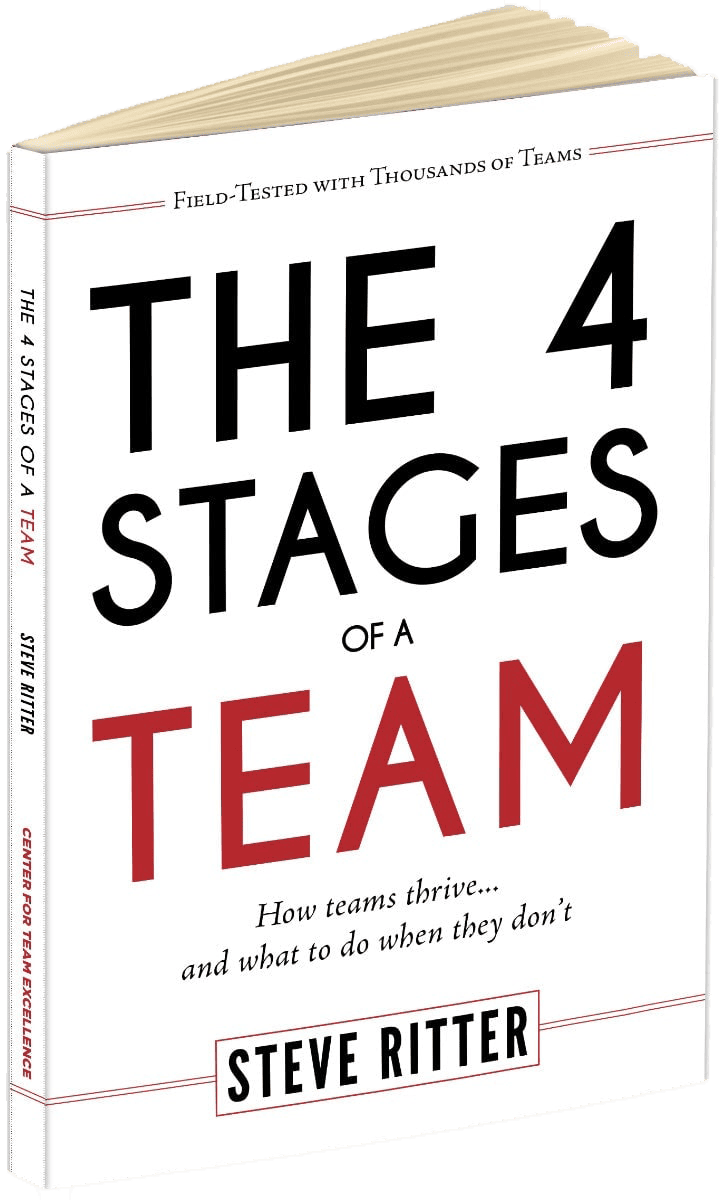
The 4 Stages of a Team is a toolkit for team survival.
The Team Clock® method has been endorsed by internationally recognized leaders in sports, consumer products, professional services, education and healthcare seeking to improve business results and the wellness of their organizations.
Running a successful business involves people, processes and products. This book is about the people – written to support teams of people for sustained success.
60 Seconds on the Team Clock
There’s a Hole in the Bucket
Think about the last few social or professional interactions you’ve experienced. Some people fuel you; others drain you. The ‘fuelers’ share energy in a mutual exchange. The ‘drainers’ take more than they give. Their neediness leaves you feeling depleted. It’s as if there’s a hole in their bucket. No matter how much you pour in, it never fills.
Partnerships and Puzzles
Coaches, advisors, and counselors are often tapped when we are out of resources. We seek help in the form of a new perspective, some friendly support, or a solution to a vexing problem. The request is usually reactive, not proactive. What if your helper came alongside of you for the whole journey, not just the end? A partnership like that would be unlikely to run out of energy or ideas because the relationship creates its own fuel.
Slow Motion Succession Planning
I might remember the beach walk more vividly than the children holding my hands. They’re more likely to recall having just beaten their grandfather in a shoreline race only moments before – or maybe the stroll through the woods when we collected acorns. We planted those acorns that day, both literally and figuratively. We’ll track the growth of the baby oak trees each year while we make new investments in our evolving relationships. It’s a slow-motion succession plan.